
Summary
During the recent academic conference “SECURITY IN THE BLACK SEA REGION: SHARED CHALLENGES, SUSTAINABLE FUTURE. EUROPE AND ITS NEIGHBOURHOOD,” held in Bucharest in April 2026, the evolving nature of unconventional warfare took center stage. A key highlight of the three-day conference was a dedicated panel focused on the future trajectories of these challenges, featuring a presentation by Dan Sultănescu (SNSPA) based on data collected and analyzed as part of the BROD project activities.
Addressing the “Scenarios for the development of Hybrid Threats in the Black Sea Region”, Dan Sultănescu’s presentation explored the complex, below-the-threshold tactics that are increasingly testing regional stability, using data extracted from digital communication.
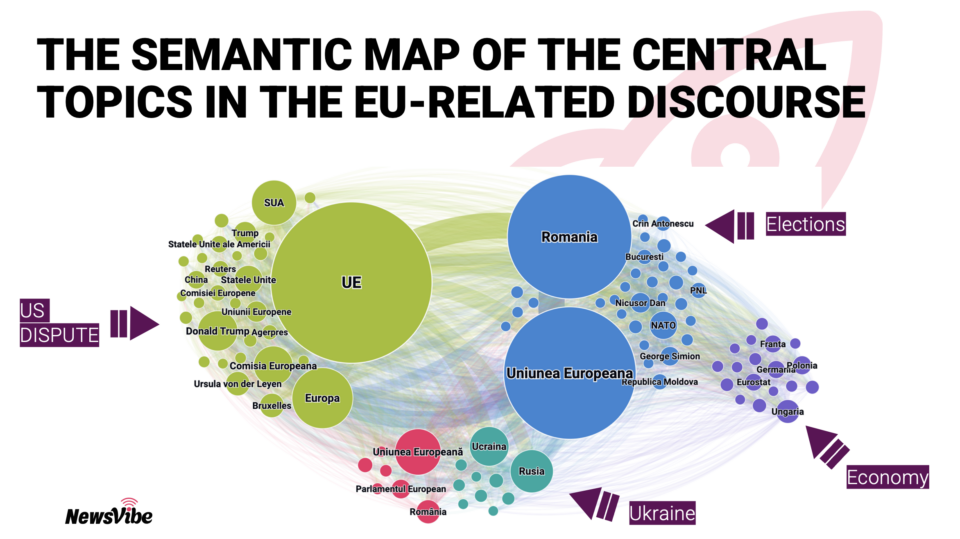
Delving into the intricacies of EU-related discourse in the Romanian digital environment, the presentation focused first on a “big picture” of the public debate related to the institution itself, analyzing trends, central themes, sentiment analysis, semantic maps.
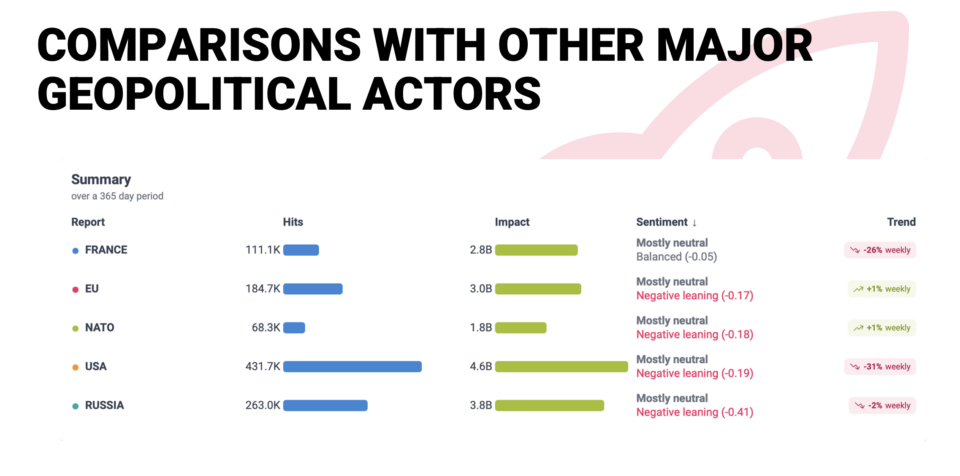
The visibility of the EU was compared to the digital discourse about other main geopolitial actors, such as NATO, the US, Russia or France, to provide further context and to allow comparisons related to tonality or impact.
The presentation also highlighted two primary areas of concern driving the online conversation related to the UE. The first centers on the SAFE and ReArm initiatives – the EU’s rearmament programs – which are currently generating significant negative sentiment toward the Union. The analysis of the digital landscape revealed a stark contrast in how different entities are framed by different sources.
The second focus area examined the pervasive narrative of “Romania as an EU colony.” Tracking this rhetoric from the last 12 months, the data showed exactly how specific, ideologically aligned sources articulate and promote this anti-EU stance to manipulate sentiment dynamics and emphasized the fact that the intensity of these weaponized narratives is steadily increasing.
Ultimately, the corrosive impact of these hybrid strategies on public trust in Western institutions becomes evident, a vulnerability starkly substantiated by recent polling data.
The analysis employed a robust dual-methodology that combined secondary analysis of sociological survey data with advanced automated content analysis using the NewsVibe platform. This hybrid approach systematically tracked online discourse across traditional web sources but also social media platforms like Facebook, TikTok and YouTube, analyzing over 1 million aggregated mentions. This comprehensive method allowed for a precise quantitative and qualitative assessment of weaponized narratives – such as the SAFE/ReArm initiatives and the “EU colony” discourse. By evaluating mention volumes, estimating digital impact and classifying content based on its source (e.g., radical/alternative vs. mainstream), the research mapped how these specific anti-Western issues evolve and take shape in the digital space. Furthermore, AI-powered algorithms categorized the dominant ideological contexts framing these debates, while deep sentiment analysis captured further insights related to the digital discourse about the EU.