

Summary
As part of the UNESCO World Trends in Freedom of Expression and Media Development 2025 report, Dan Sultănescu, PhD, research director at CPD SNSPA, coordinated a major comparative study exploring how citizens in different regions of the world use and evaluate artificial intelligence.
The research was conducted in partnership with the College of Information and Communications at the University of South Carolina and with support from UNESCO, covering four countries from different regions: the United States, Romania, Mexico and South Africa. It represents one of the first cross-national surveys linking public perceptions of AI with broader questions of democracy, information integrity and media trust.
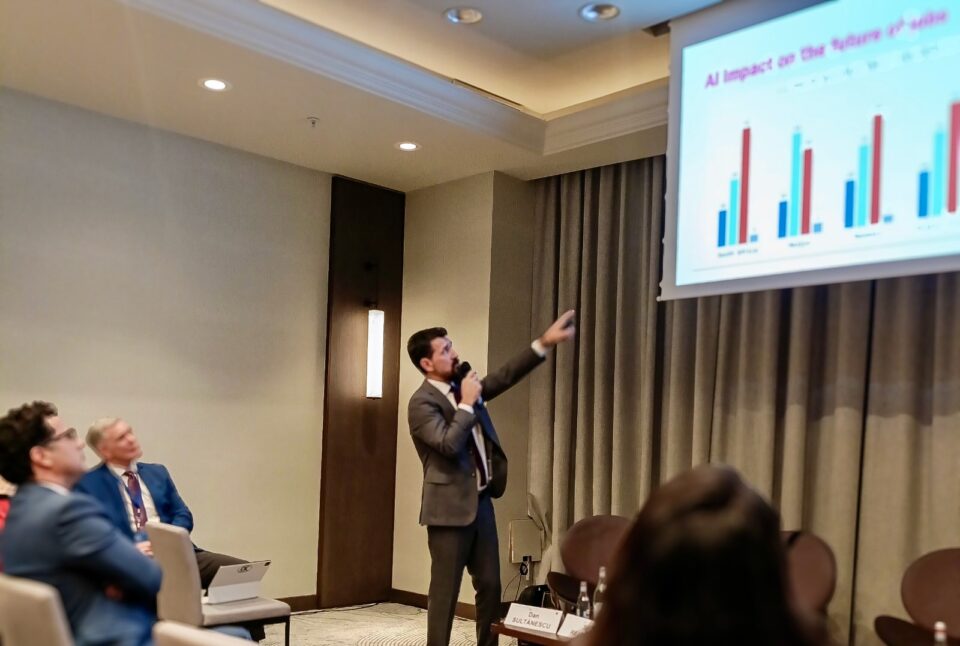
The results show a world that is both fascinated and uneasy about AI’s rapid rise. Public awareness is nearly universal – over 97% of respondents reported familiarity with the concept – but the meaning and perceived risks of AI differ sharply by country. In Romania and the United States, concern about misinformation and electoral manipulation is higher, reflecting recent polarized elections. Meanwhile, Mexico and South Africa express greater anxiety about AI’s economic consequences, such as job losses, but are more optimistic about its democratic potential.
Perhaps the most striking finding is that AI tools are trusted more than government, business, or the press in most countries surveyed. This paradox – of skepticism toward institutions and traditional media yet confidence in technology – raises profound questions about how people assign credibility in an algorithmic age.
When asked about regulation, respondents favored a mix of self-regulation by tech companies and stronger public oversight, with Romanians and Americans especially supportive of government intervention.
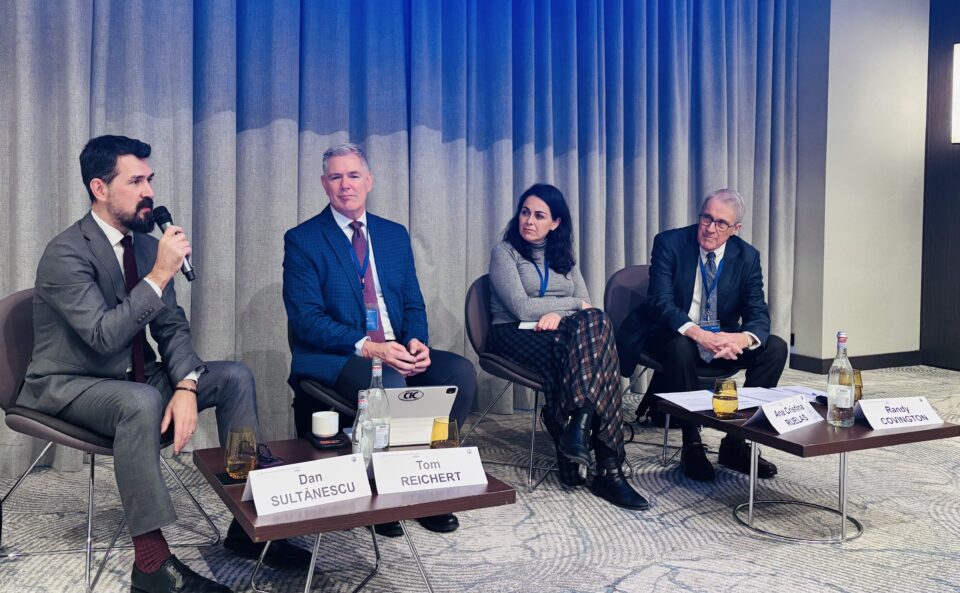
As Dan Sultănescu concludes in the report, AI is no longer a distant concept – it has become a visible and influential force in people’s everyday lives. It is reshaping how citizens consume information, engage in debate and perceive truth itself. The findings underline an urgent need for transparent governance and international cooperation to ensure that AI strengthens, rather than undermines, democratic processes.
These critical insights were presented as a premiere at the 2025 Bucharest Security Conference (BSC) during a dedicated workshop titled “AI and Democracy after the Super Electoral Year”. Organized by CPD SNSPA, the session served as a preview of the UNESCO World Trends report ahead of its official launch in December 2025.
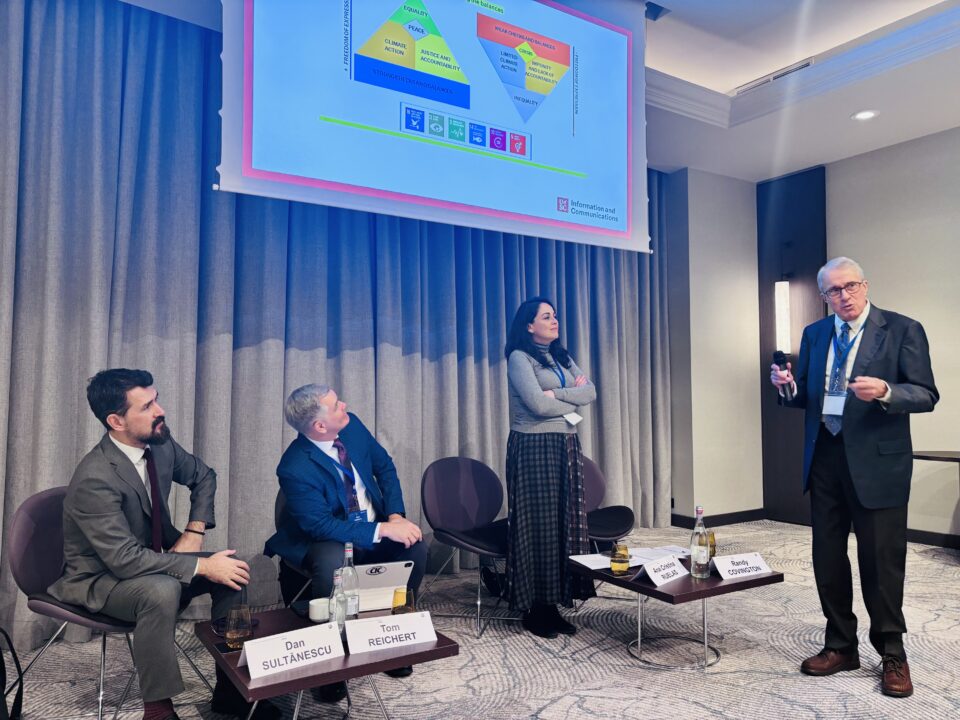
The panel was moderated by Tom Reichert, Dean of the College of Information and Communications at the University of South Carolina, and featured Randy Covington, acting UNESCO Chair at the same university, who detailed the report’s main conclusions. The discussion was further distinguished by contributions from UNESCO’s Ana Cristina Ruelas about the role and future of journalism. A special video message from H.E. Ambassador Simona-Mirela Miculescu strengthened the necessity of shaping legislation that guards against potential misuse of AI and also advocated for academic cooperation between UNESCO chairs at different universities.
