
Summary
The Moldovan elections are over, and while the ballots have been counted, the geopolitical battle is far from over.
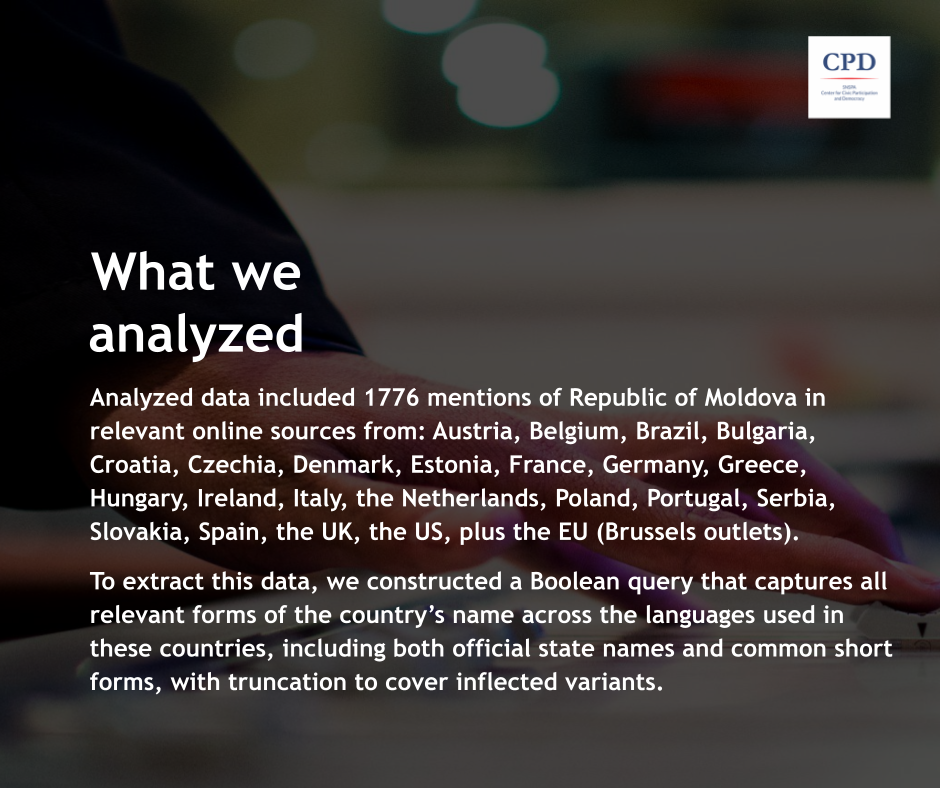
But what are the dominant narratives being crafted by the international media? We analyzed the past week of online coverage, which included the immediate pre- and post-electoral context, to decode the signals coming from over 20 countries (excluding Moldova, Romania and Russia), revealing the undercurrents of a complex and polarized conversation.
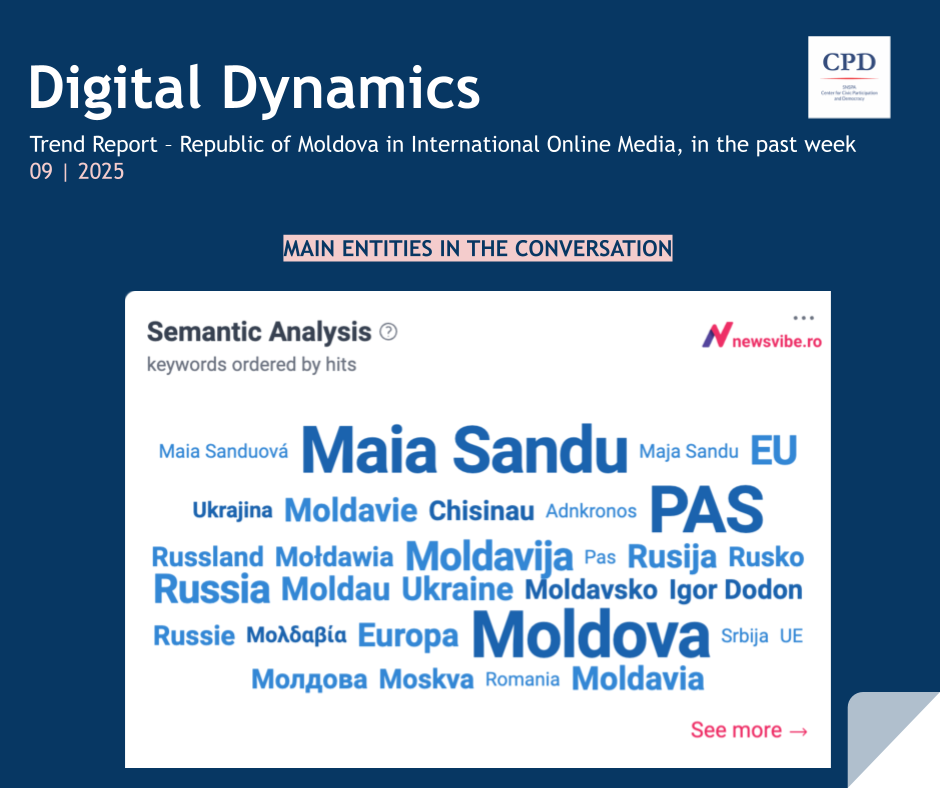
The digital conversation paints a picture of a nation at a crossroads. Discussions consistently revolve around President Maia Sandu, her pro-integration PAS party and the country’s relationship with two major geopolitical poles: the European Union and Russia.
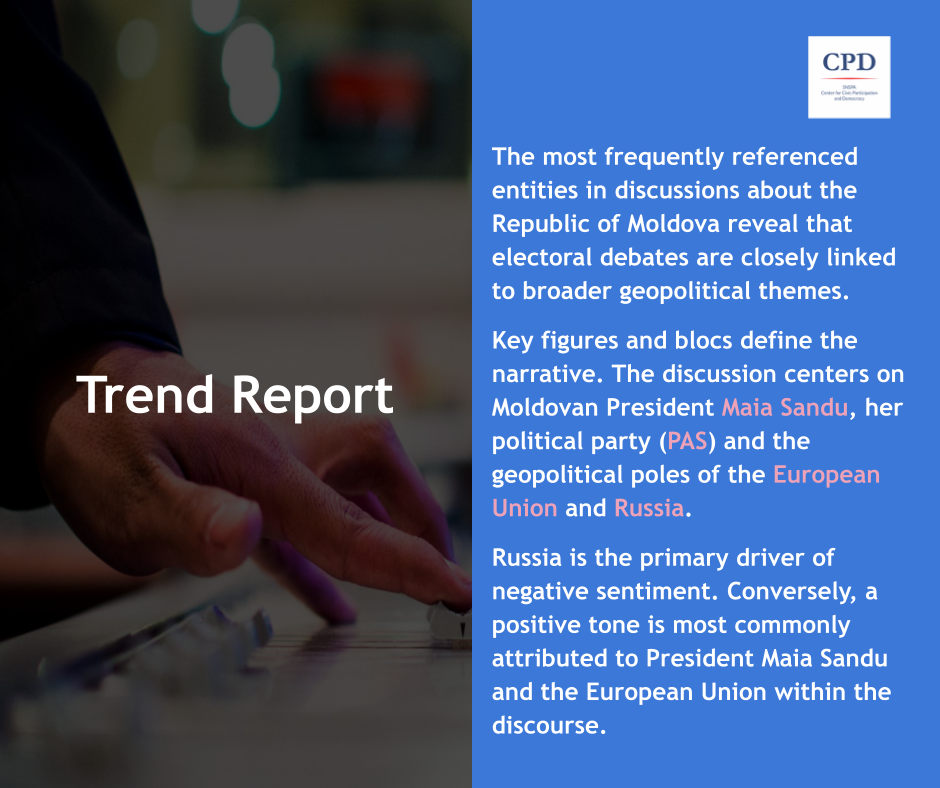
The source of the media’s negativity becomes clearer when looking at these specific topics. Mentions of Russia and its associated entities are the primary drivers of negative coverage. In sharp contrast, stories focused on President Sandu and the EU tend to be associated with a positive tone.
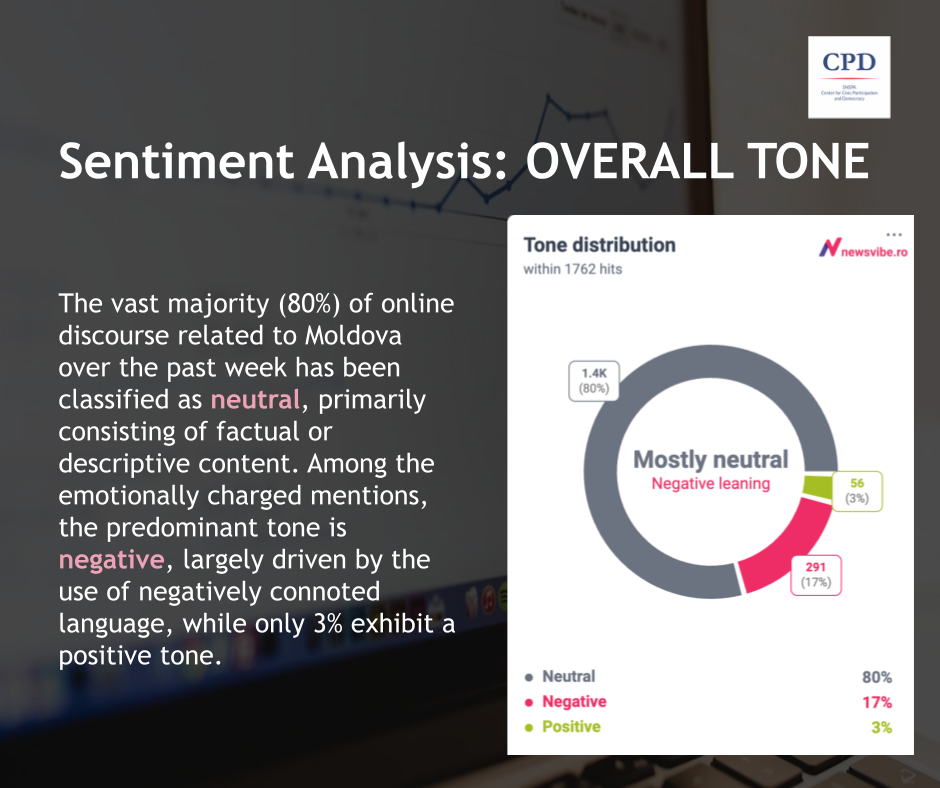
At first glance, the global conversation about Moldova appears balanced. The vast majority of online articles – four out of every five – are straightforward and informational, avoiding strong emotional bias, indicating a focus on factual events and developments.
When the reporting does carry an emotional weight, it’s almost six times more likely to be negative than positive. This lean towards negativity appears to be driven by the very language required to discuss key topics, especially in the pre-electoral period, terminology revolving around conflict and tension naturally carrying a negative charge.
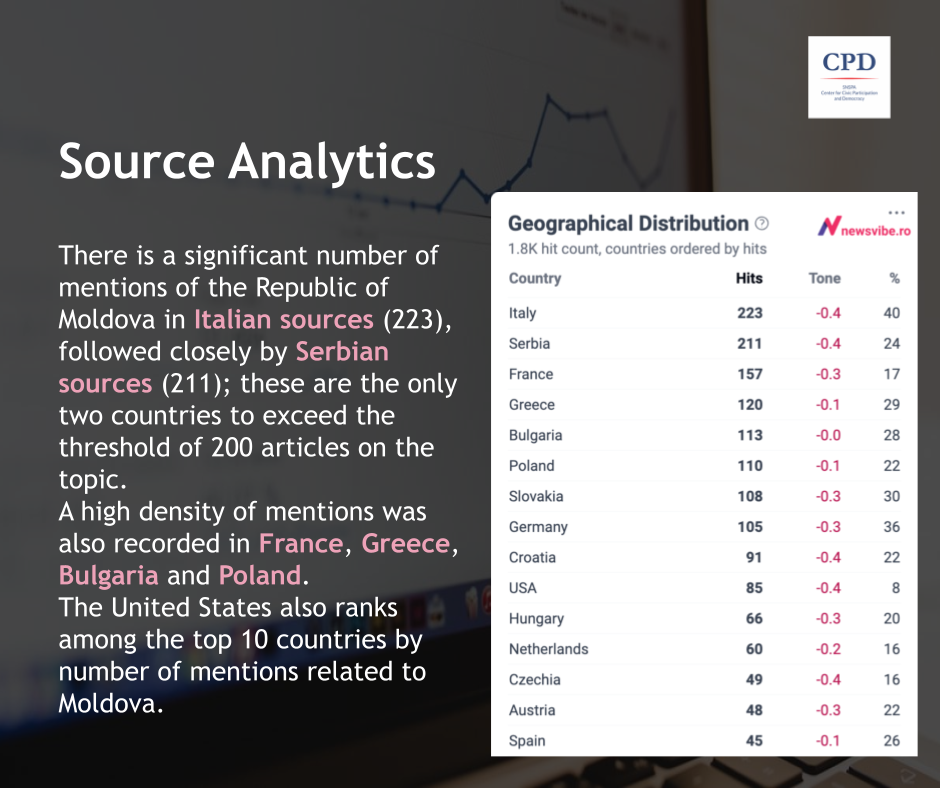
Source-wise, media outlets in Italy and Serbia have published the most content about Moldova over the past week, making them the most active observers.
In essence, while the world reports on Moldova factually for the most part, the underlying narrative is one of tension. The media highlights a nation actively pursuing a European future, with President Sandu at the forefront, while simultaneously grappling with the complex and often critically-portrayed influence of Russia.
The articles published on civicparticipation.ro solely reflect the views of their authors and do not represent SNSPA’s official position.